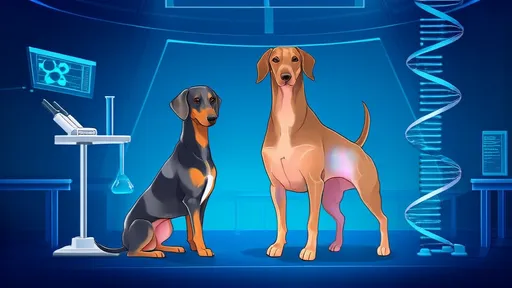
The striking diversity in dog breeds never fails to captivate observers, with the extremes of size variation being particularly remarkable. From the diminutive Dachshund to the towering Great Dane, the canine world showcases a spectrum of heights that seems almost implausible for a single species. Behind this dramatic divergence lies a fascinating genetic story centered on the IGF1 gene, a key player in the regulation of growth and stature.
Scientists have long been intrigued by the mechanisms that allow such extreme size differences to emerge within a species that shares 99.9% of its DNA across breeds. The insulin-like growth factor 1 (IGF1) gene has emerged as the primary architect of canine height variation. This gene produces a protein that plays a crucial role in stimulating cell growth and proliferation, particularly during development. The discovery of IGF1's central role in canine size determination has provided profound insights into how artificial selection can dramatically alter body plans within remarkably short evolutionary timescales.
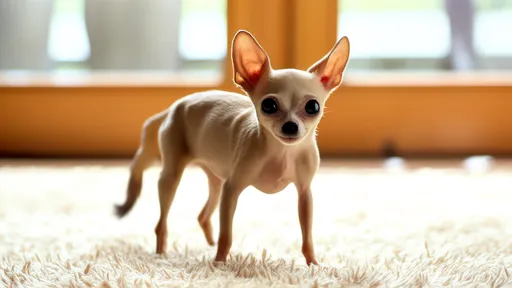
The IGF1 gene's influence on canine stature became apparent through genome-wide association studies comparing small and large dog breeds. Researchers found that a single nucleotide polymorphism (SNP) in the IGF1 gene was present in nearly all small dog breeds but absent in their larger counterparts. This genetic variant, located in a non-coding region of the gene, affects the production levels of IGF1 protein during critical growth periods. Small breeds like Dachshunds and Chihuahuas typically carry two copies of this variant, resulting in reduced IGF1 production and consequently smaller body size.
What makes the Dachshund's case particularly interesting is how breeders have amplified the effects of the IGF1 variant through selective breeding. The characteristic elongated body and short legs of Dachshunds result from an additional genetic factor - a mutation in the FGF4 gene that causes disproportionate dwarfism. When combined with the IGF1 variant, these genetic changes produce the breed's distinctive proportions. This demonstrates how breeders have effectively stacked multiple genetic modifications to create extreme morphological traits.
At the opposite end of the spectrum, Great Danes and other giant breeds tell a different genetic story. These colossal canines possess variants in the IGF1 pathway that lead to prolonged growth periods and increased IGF1 production. Unlike small breeds where growth is restricted early, large breeds continue growing for an extended duration, sometimes up to two years. This extended growth phase, coupled with higher levels of growth factors, allows their bones to reach extraordinary lengths. However, this comes at a cost - giant breeds often face health challenges related to their size, including joint problems and reduced lifespan.
The evolutionary history of these size variations reveals how humans have shaped canine genetics. Archaeological evidence suggests that small dog varieties appeared relatively early in the domestication process, with remains of small dogs dating back over 12,000 years found in the Middle East. This indicates that the IGF1 variant responsible for small size was among the first genetic changes to emerge under human selection pressure. The reasons for selecting smaller dogs might have included practical considerations like reduced food requirements or symbolic meanings associated with miniature animals.
Modern genetic techniques have allowed researchers to pinpoint not just the IGF1 gene itself, but also the complex network of regulatory elements that control its expression. It turns out that the genetic differences between large and small breeds often lie in these regulatory regions rather than in the protein-coding sequences of growth-related genes. This explains how subtle changes in gene regulation can lead to dramatic phenotypic differences without altering the fundamental structure of the proteins involved in growth.
The story of canine size variation through IGF1 provides a powerful example of how selective breeding can rapidly alter complex traits. While the natural evolutionary process might take millennia to produce significant size changes in wild species, human-directed selection has achieved extreme results in mere centuries. This rapid change underscores the remarkable plasticity of canine genetics and the powerful influence of artificial selection. As we continue to unravel the genetic basis of canine traits, the IGF1 story serves as a paradigm for understanding how single genes can have outsized effects on morphology when placed under strong selective pressure.
Looking beyond dogs, the insights gained from studying IGF1 in canines have broader implications for understanding growth regulation in mammals. The same growth pathways operate in humans and other animals, and variations in these pathways can lead to similar size variations. In fact, some human growth disorders involve mutations in the IGF1 pathway, mirroring the effects seen in dog breeds. This makes the canine system not just fascinating in its own right, but also a valuable model for biomedical research.
As genetic research progresses, scientists are discovering that the IGF1 gene interacts with numerous other genes to produce the full range of canine sizes. While IGF1 may be the major player, it doesn't act alone. Genes affecting bone development, cartilage formation, and metabolic processes all contribute to the final stature of a dog. This complex interplay explains why breeds of similar size might achieve that size through slightly different genetic combinations, and why predicting a dog's adult size from its genetics isn't always straightforward.
The tale of IGF1 in dogs ultimately reveals how humans have harnessed genetic variation to create an astonishing array of forms from a single ancestral population. From the compact Dachshund to the majestic Great Dane, the spectrum of canine sizes stands as a testament to both the power of selective breeding and the remarkable flexibility of biological systems. As we continue to explore the genetics behind these variations, we gain not only a deeper appreciation for our canine companions but also valuable insights into the fundamental mechanisms of growth and development shared across species.

By /Jun 12, 2025
By /Jun 12, 2025
By /Jun 12, 2025
By /Jun 12, 2025
By /Jun 12, 2025

By /Jun 12, 2025
By /Jun 12, 2025
By /Jun 12, 2025
By /Jun 12, 2025
By /Jun 12, 2025
By /Jun 12, 2025
By /Jun 12, 2025
By /Jun 12, 2025
By /Jun 12, 2025
By /Jun 12, 2025
By /Jun 12, 2025
By /Jun 12, 2025
By /Jun 12, 2025
By /Jun 12, 2025
By /Jun 12, 2025