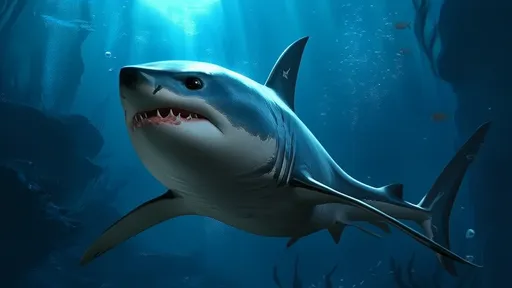
The ocean depths harbor countless mysteries, but few creatures embody evolutionary ingenuity quite like the spiny dogfish. This small but formidable shark, named for the sharp dorsal spines that serve as its primary defense mechanism, has survived for over 100 million years by perfecting the art of self-preservation. Often overlooked in favor of its larger, more glamorous cousins, the spiny dogfish demonstrates that in nature, sometimes the most effective survival strategies come in unassuming packages.
A Living Fossil with a Tactical Advantage
Belonging to the Squalidae family, the spiny dogfish (Squalus acanthias) is a study in biological efficiency. Measuring just 2-4 feet long, it lacks the size of great whites or the speed of mako sharks. Instead, evolution has equipped this species with two venomous spines—one preceding each dorsal fin—that can inflict painful wounds on predators. These spines aren’t just passive deterrents; they’re active weapons. When threatened, the dogfish arches its back to erect the spines, transforming itself into a living pincushion. Historical records from fishermen describe these spines capable of piercing leather gloves and embedding deep into human flesh, causing swelling that lasts for days.
The spines contain a mild venom, though its composition remains poorly understood. What scientists do know is that this chemical cocktail amplifies the physical damage, creating a memorable experience for any predator foolish enough to attack. This two-pronged defense—mechanical and chemical—makes the spiny dogfish one of the ocean’s most well-protected small predators. Fossil evidence suggests this design hasn’t changed significantly since the Cretaceous period, proving its effectiveness across geological epochs.
Masters of Camouflage and Endurance
Beyond its iconic spines, the spiny dogfish employs other survival tactics that border on the supernatural. Its slate-gray back and white belly provide classic countershading, rendering it nearly invisible both from above (against the dark seabed) and below (against the sunlit surface). This camouflage isn’t just visual—the shark’s skin contains specialized denticles that reduce hydrodynamic noise, allowing it to move silently through the water. Unlike most fish that rely on buoyancy swim bladders, dogfish maintain their depth through oily livers and constant motion, a trait shared with all sharks but perfected by this species’ legendary stamina.
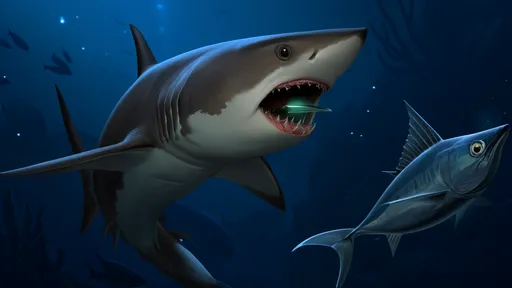
Tagging studies have revealed spiny dogfish undertaking transoceanic migrations spanning thousands of miles, with some individuals traveling from the North Atlantic to the Mediterranean and back. This endurance stems from their cold-blooded efficiency and a circulatory system that conserves heat in critical muscles and organs. Such adaptations allow them to thrive in waters as cold as 32°F (0°C), giving them access to food-rich polar regions where few competitors dare venture. Their diet—a mix of fish, squid, and crustaceans—is opportunistically broad, ensuring survival even when preferred prey becomes scarce.
The Delicate Balance of Defense and Vulnerability
Ironically, the very adaptations that make spiny dogfish nearly invincible in nature have made them vulnerable to human exploitation. Their slow reproductive cycle (females gestate for nearly two years, the longest of any vertebrate) combined with dense schooling behavior makes them easy targets for commercial fisheries. For centuries, their meat has been used in British fish and chips, their liver oil for vitamins, and their rough skin as an industrial abrasive. Conservation groups now sound alarms as populations in the Northwest Atlantic have declined by over 75% since the 1980s due to overfishing.
Yet there’s hope in their resilience. Marine biologists note that protected populations rebound faster than expected, suggesting that given breathing room, these ancient survivors can outlast human pressures. Some fisheries have adopted innovative management strategies, like releasing pregnant females caught in nets—a practice that could balance economic needs with ecological sustainability. As climate change alters ocean ecosystems, the spiny dogfish’s adaptability may become its greatest asset, proving once again that evolution’s best designs often thrive against the odds.
The story of the spiny dogfish serves as a microcosm of oceanic survival—where anatomical ingenuity meets environmental challenge. From its Cretaceous ancestors to modern fishing nets, this shark’s journey underscores nature’s relentless creativity in the face of adversity. As we continue exploring the ocean’s depths, the spiny dogfish reminds us that true evolutionary success isn’t about size or strength, but about perfecting the art of persistence.

By /Jun 11, 2025

By /Jun 11, 2025

By /Jun 11, 2025

By /Jun 11, 2025

By /Jun 11, 2025

By /Jun 11, 2025
By /Jun 11, 2025

By /Jun 11, 2025
By /Jun 11, 2025

By /Jun 11, 2025
By /Jun 11, 2025
By /Jun 11, 2025
By /Jun 11, 2025
By /Jun 11, 2025

By /Jun 11, 2025

By /Jun 11, 2025